The right knife sharpener depends on where you work, the blade you need to maintain, and how much control you want over the sharpening process. These options range from compact field tools for hunting knives to guided systems and whetstones suited to a home kitchen or workshop.
Quick Top Products
Work Sharp Guided Field Sharpener Elite
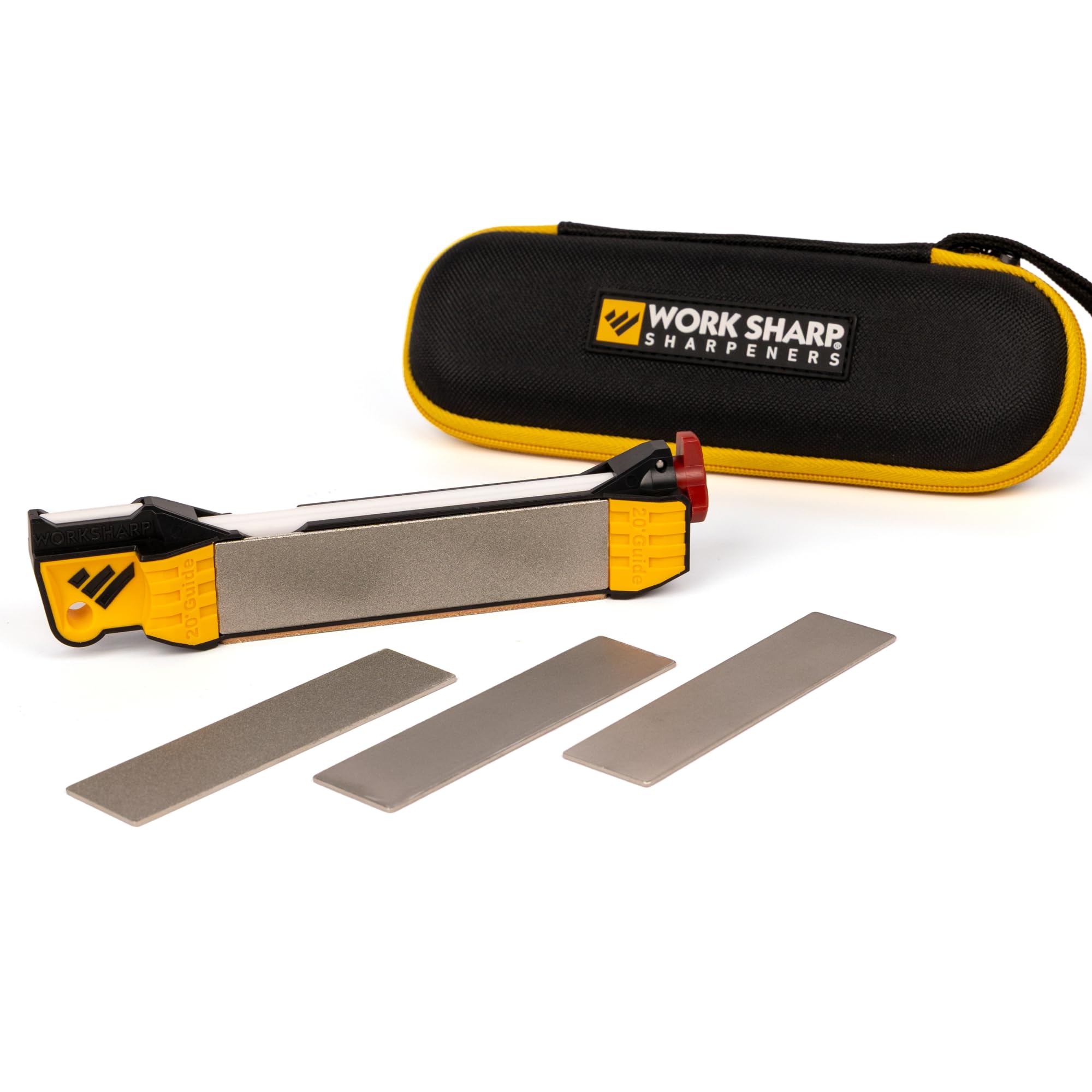
- Includes diamond plates, ceramic rods, a leather strop, guides, and a case.
- The rotating rod has coarse, fine, and fish-hook surfaces.
- A 20–25-degree guide works with five abrasives.
Best For: Hunters and anglers who want a portable kit with sharpening accessories together.

Work Sharp Precision Adjust Knife Sharpener Kit
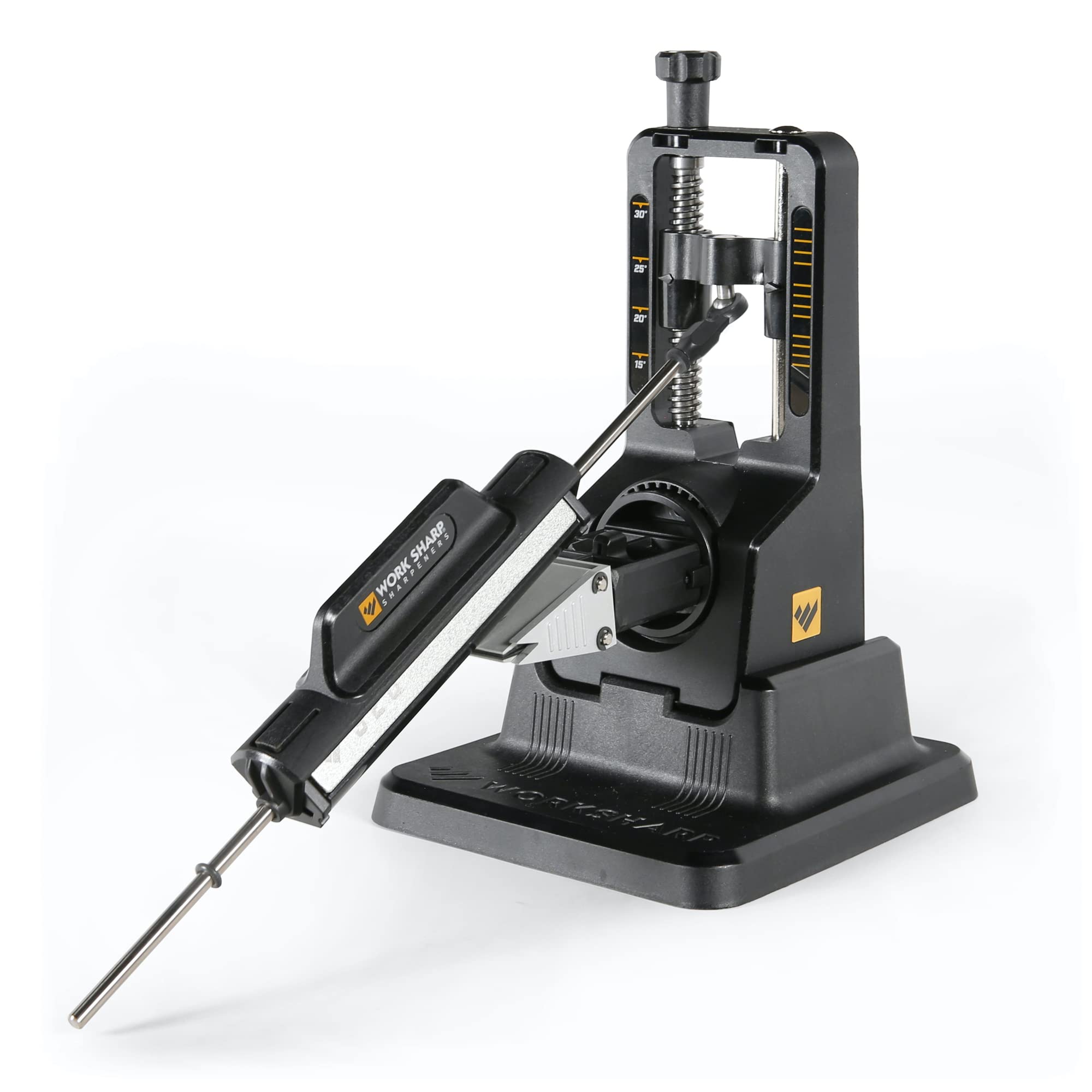
- Angle adjusts from 15 to 30 degrees in one-degree increments.
- The three-sided rod switches among diamond and ceramic abrasives.
- A V-block clamp secures the knife during sharpening.
Best For: Knife owners who want a clamp-based manual system with adjustable angle control.
Work Sharp Professional Precision Adjust
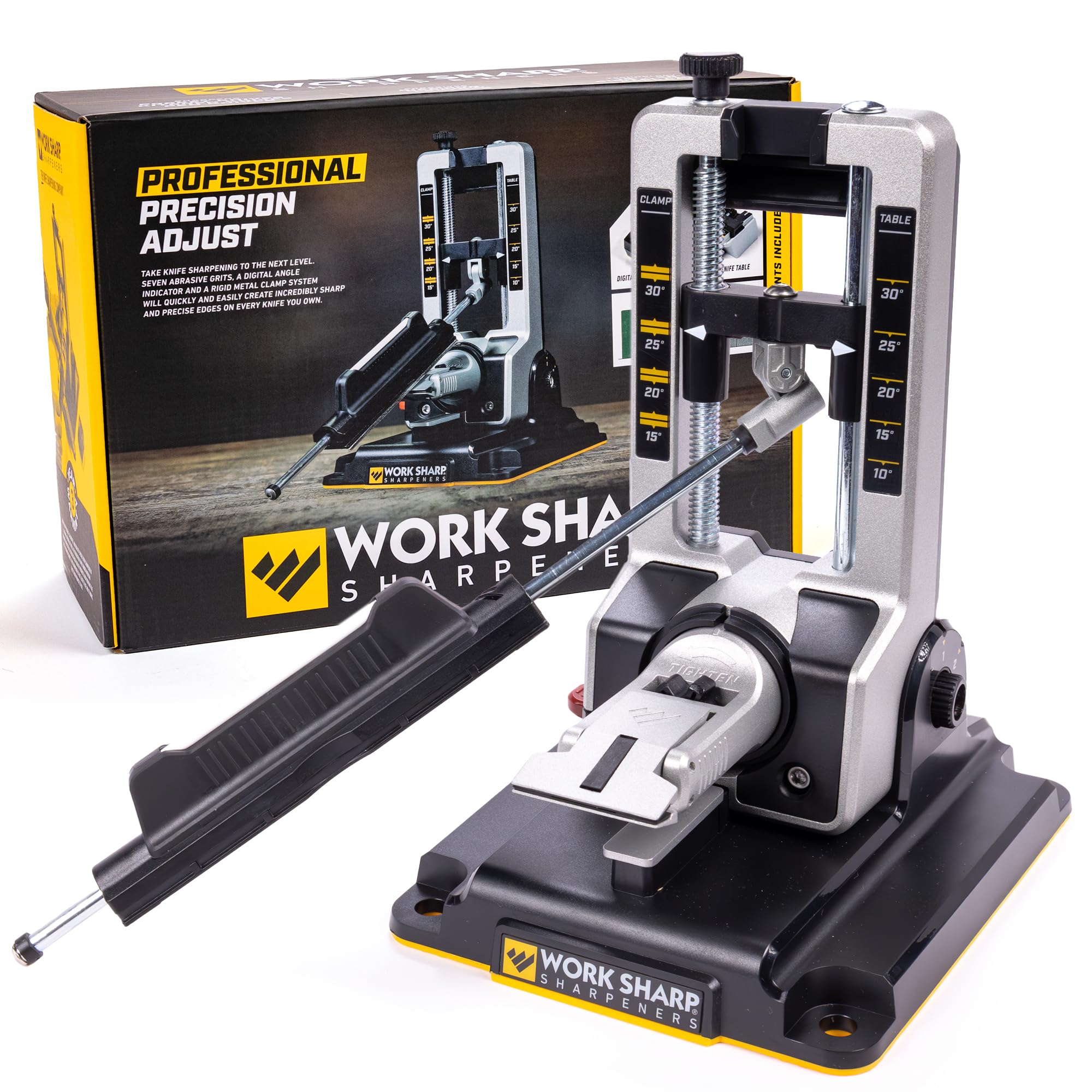
- Includes seven abrasives, from 220-grit diamond through a leather strop.
- The angle adjusts from 15 to 30 degrees.
- A digital indicator helps set the sharpening angle.
Best For: Enthusiasts who want a guided system with multiple grits and angle indication.
Work Sharp Precision Adjust Elite
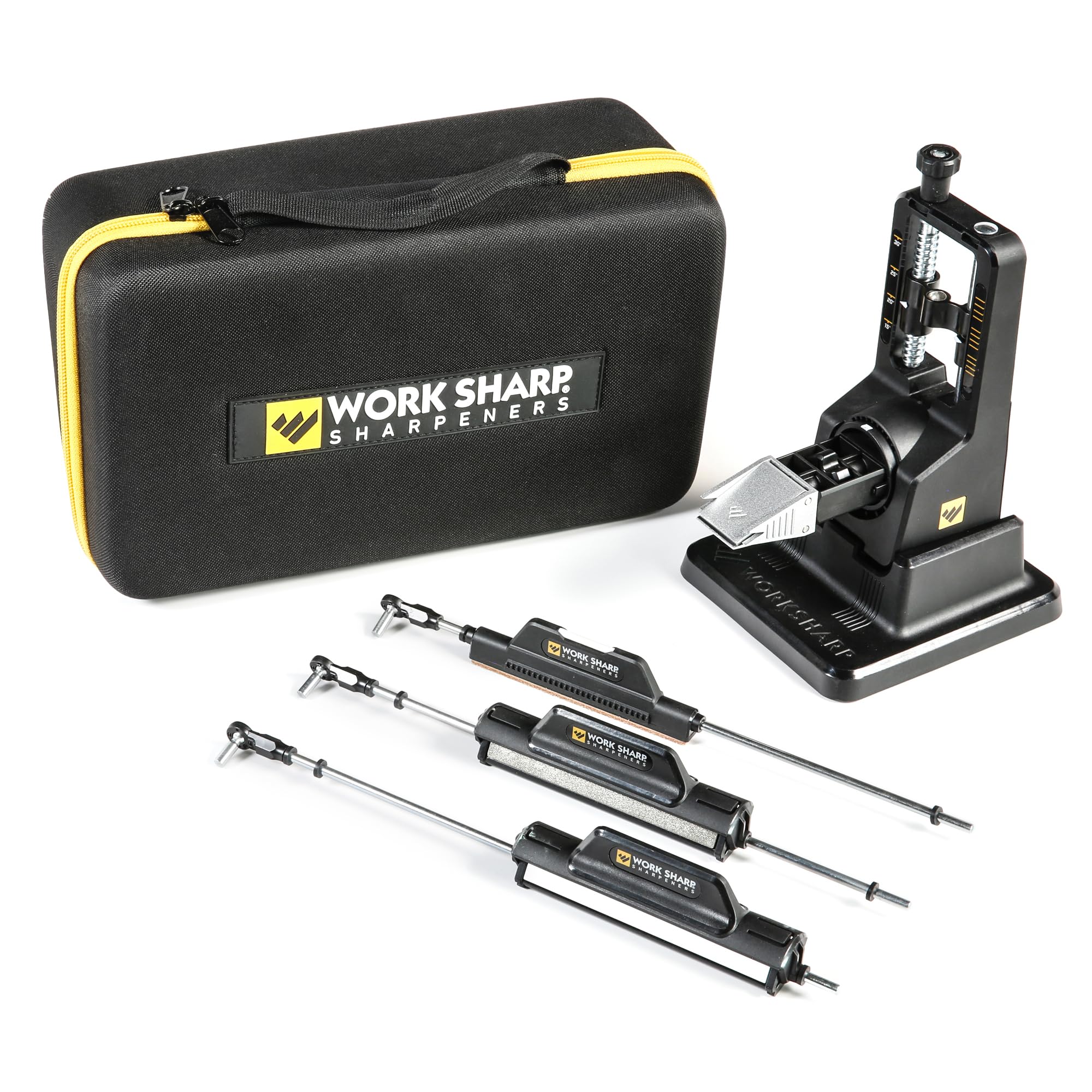
- Angle settings span 15 to 30 degrees.
- A conical ceramic rod is included for serrated blades.
- The kit includes coarse and fine diamond plates plus finishing tools.
Best For: Home cooks and hunters who want a guided sharpener that includes a serrated-blade rod.
Work Sharp MK2 Electric Knife Sharpener
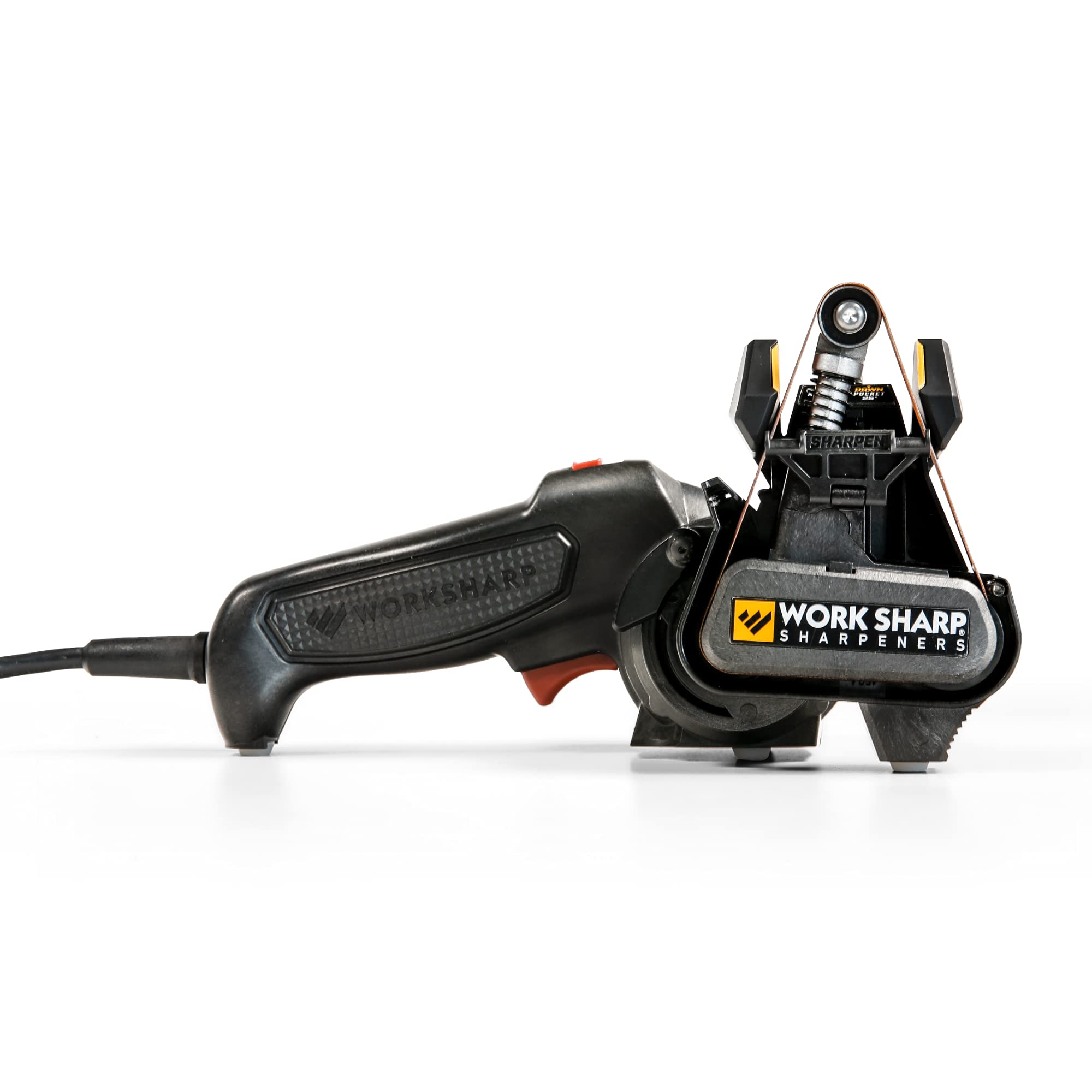
- The two-speed motor offers more control for heavier sharpening or grinding.
- Flexible belts work on knives, serrated edges, scissors, and tools.
- The edge guide supports a knife through its tip.
Best For: Users who want powered belt sharpening for knives and common outdoor or garden tools.
Work Sharp Ken Onion Knife Sharpener Mk.2
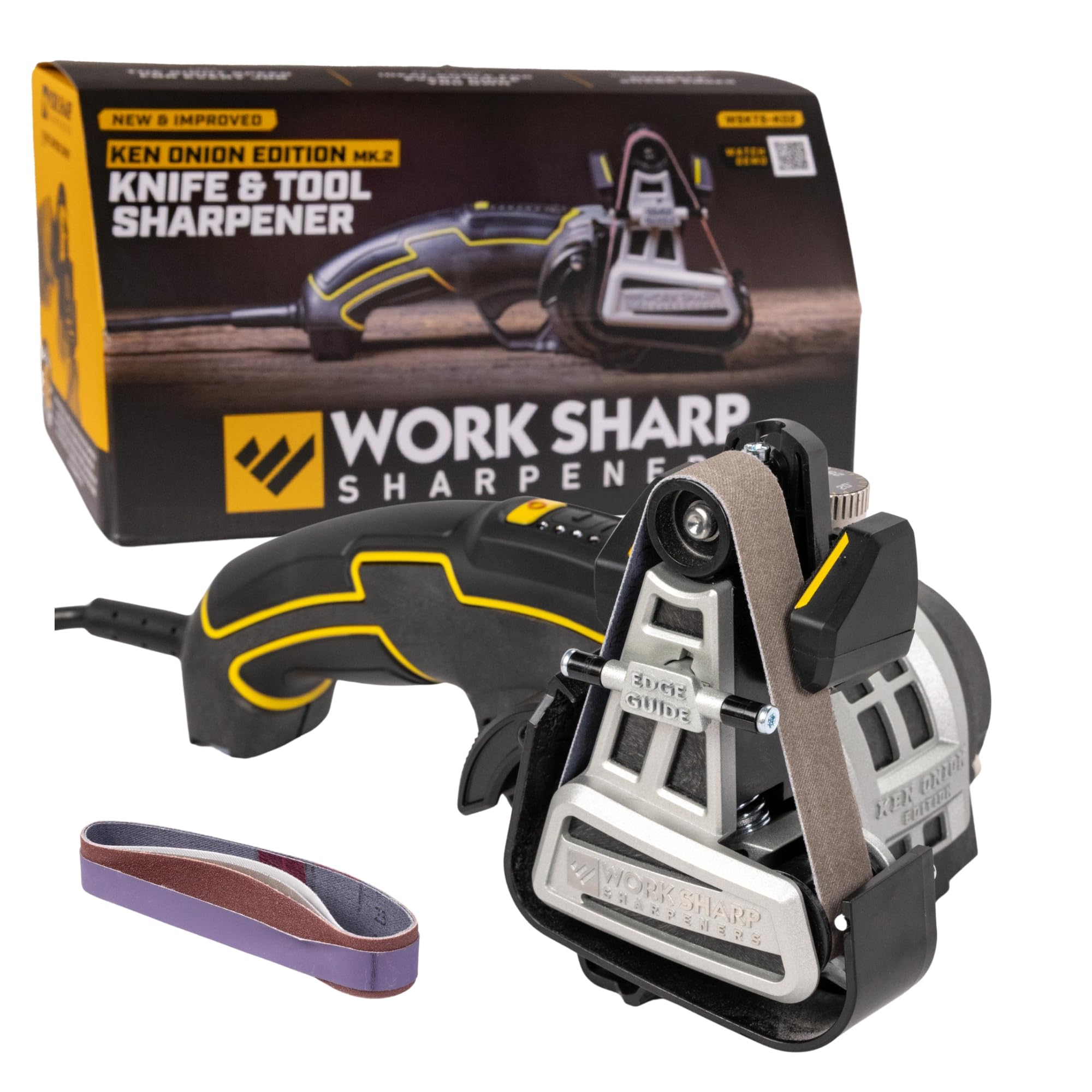
- Flexible belts work with precision guides and electronic speed control.
- It is intended for knives, scissors, serrated blades, and tools.
- The product is designed for home or shop sharpening.
Best For: Knife enthusiasts who want adjustable powered sharpening for knives, scissors, serrated blades, and tools.
Messermeister 12-Inch Ceramic Sharpening Rod
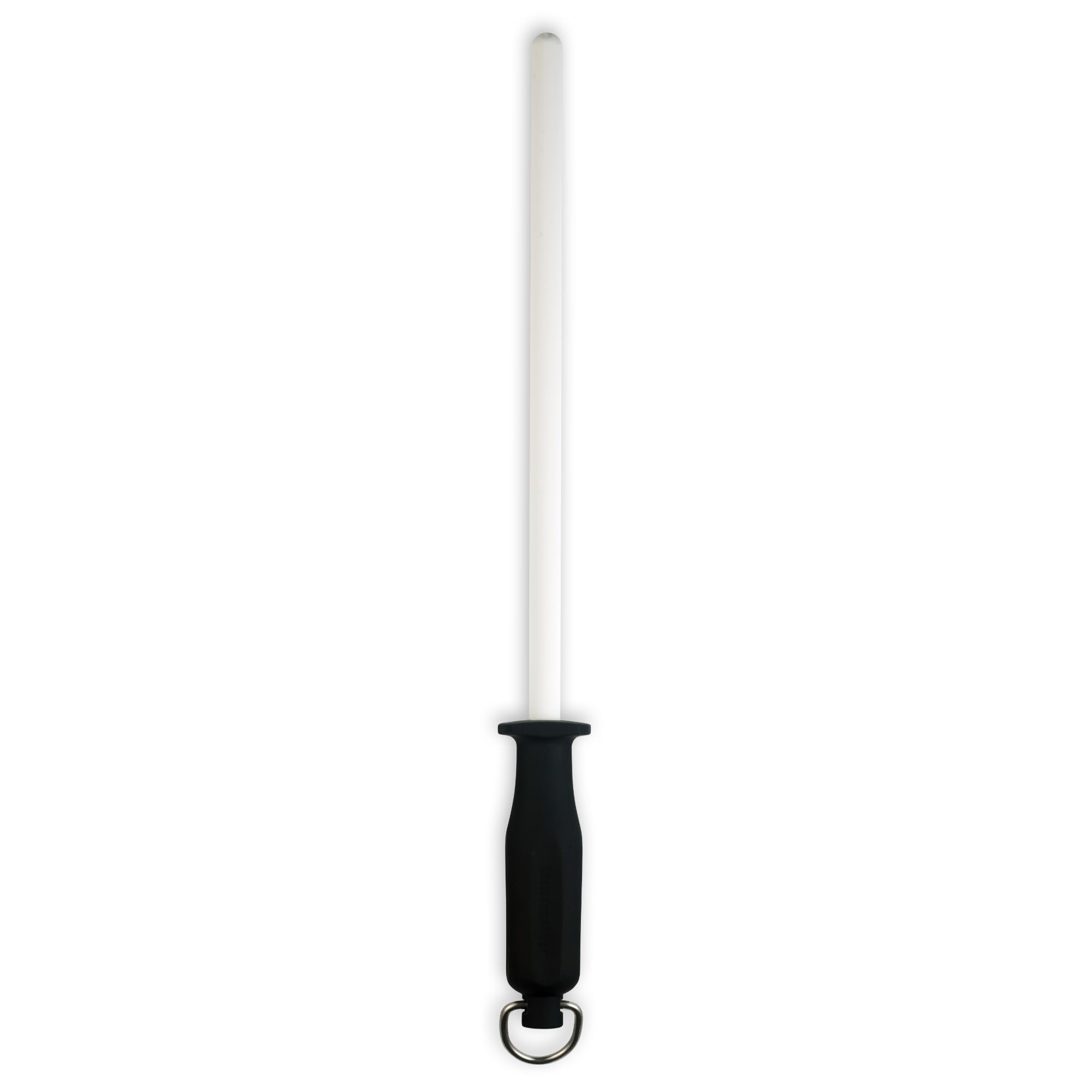
- The fine 1200-grit ceramic surface is intended for daily touch-ups.
- It has a solid ceramic core and a large round sharpening surface.
- The handle has an integrated hang ring.
Best For: Cooks who want a long ceramic rod for routine honing and polishing of knife edges.
Sharp Pebble 1000/6000 Grit Whetstone Kit
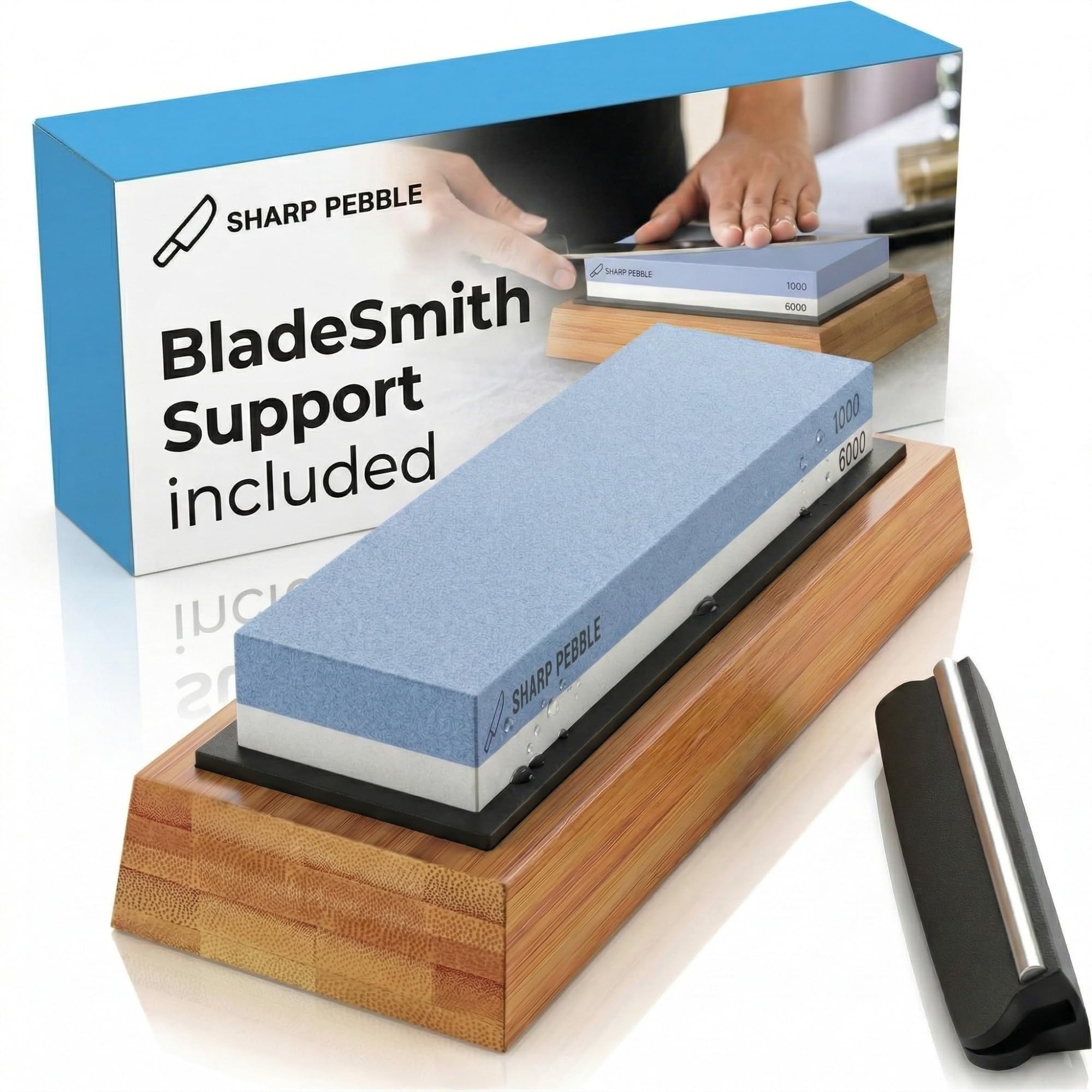
- The 1000/6000 grit sides handle edge repair and polishing.
- The kit includes an angle guide and bamboo base.
- It uses water rather than honing oil.
Best For: Home cooks seeking a water-based whetstone kit with an angle guide and stable base.
Sharp Pebble 400/1000 Grit Whetstone Kit
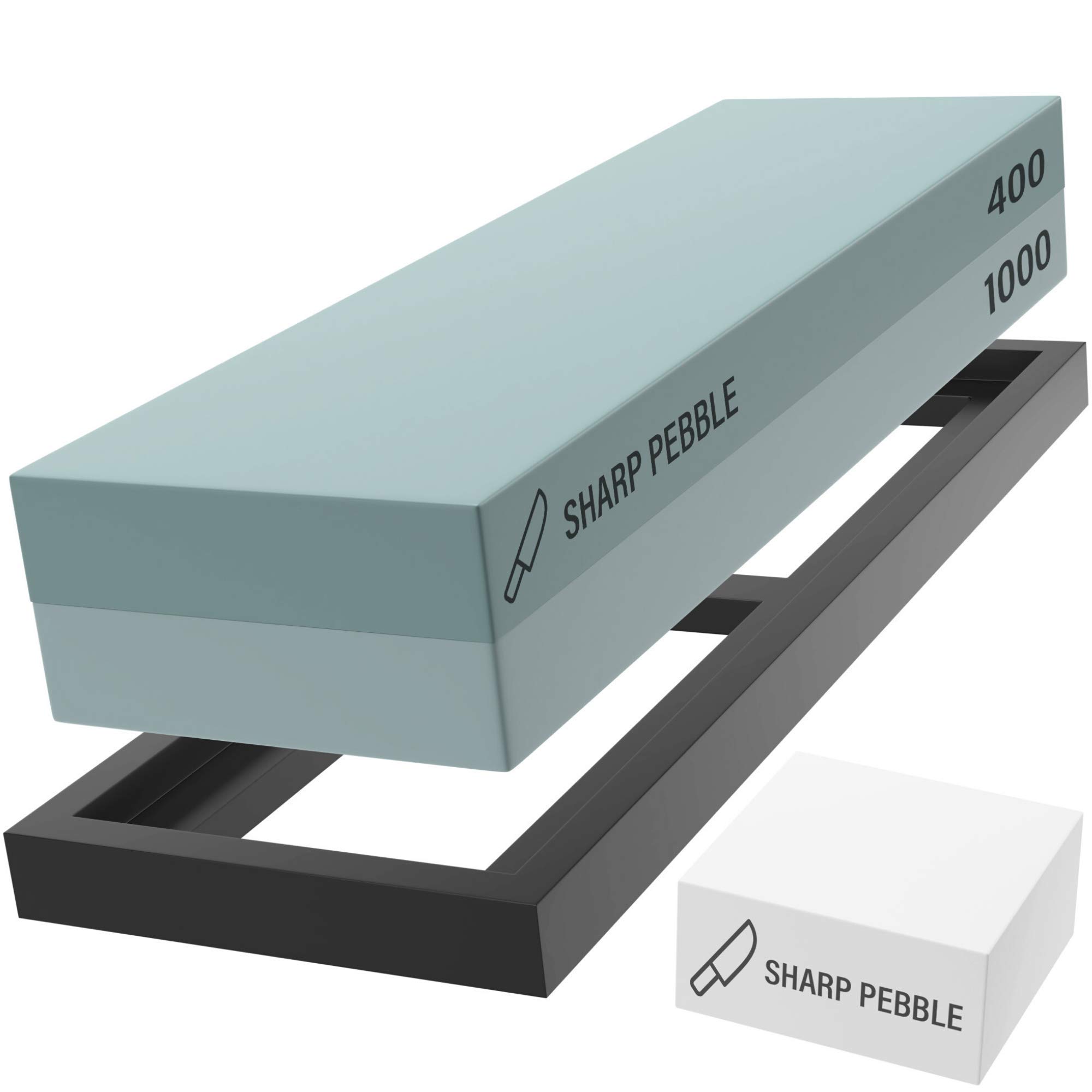
- The 400 grit side is for dull or damaged edges; 1000 grit refines them.
- The kit includes a flattening stone and non-slip rubber base.
- Sharpening uses water and does not require honing oil.
Best For: Knife owners who need a coarse stone for dull edges and want a flattening stone included.
Work Sharp Portable Pivot Knife Sharpener
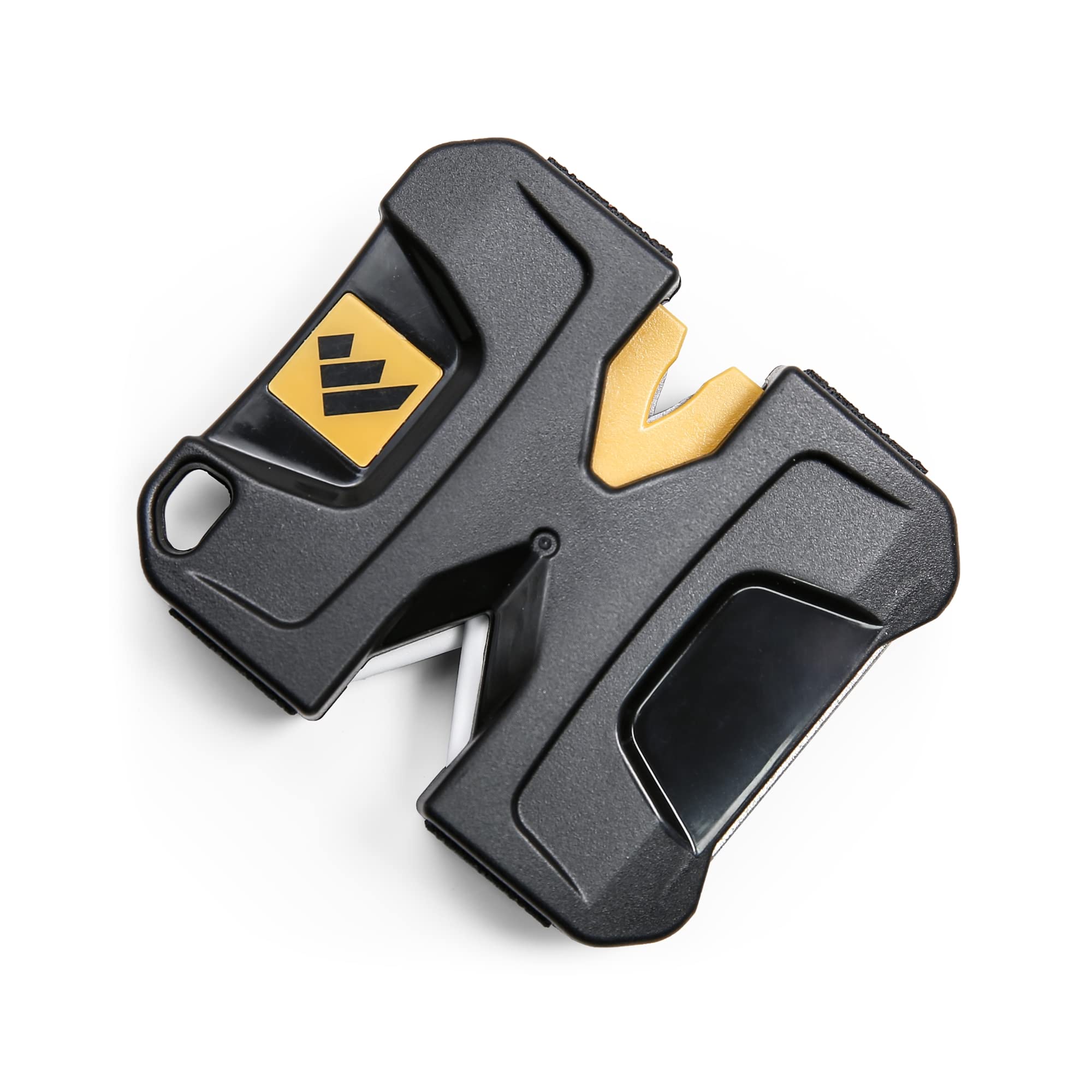
- The pivoting blades follow the curve of the knife.
- It includes ceramic honing and a diamond plate for fish hooks and tools.
- Its compact size stows in a pack, pocket, or tackle box.
Best For: Hunters and outdoor users who want a compact sharpener for quick edge maintenance on the go.
Field Kit With Carry Case
Work Sharp Guided Field Sharpener Elite with case, Travel Knife Sharpener Tool
The Guided Field Sharpener Elite packs several field-maintenance tools into a compact setup, including diamond plates, ceramic rods, a leather strop, and sharpening guides. Its ceramic rod rotates to expose coarse and fine honing surfaces, plus a grooved surface for fish hooks.
A 20–25-degree guide and five abrasives offer a structured way to touch up an edge while hunting, fishing, or hiking. The included case keeps the sharpener and additional abrasives together for carrying.
It can also serve at home or in a shop, but its compact field format is the main draw for people who maintain blades away from a bench.
Best For: Hunters and anglers who want a portable kit with sharpening accessories together.
| Pros | Cons |
|---|---|
|
|
Choose this option if you want a self-contained field kit for hunting or fishing trips, with a case and tools for more than a basic edge touch-up. The rotating rod and fish-hook groove add utility for anglers.
Before buying, check whether the fixed 20–25-degree guide suits the edges you maintain; the record does not give grit values for its five abrasives. This guided format prioritizes portability and included accessories over the broader angle adjustment found in bench systems.
Adjustable Guided Bench System
Work Sharp Precision Adjust Knife Sharpener Kit - Fixed Angle Sharpening System for Kitchen & Pocket Knives - Professional Guided Knife Sharpening Tool
This manual sharpener holds a knife in a V-block clamp while a three-sided abrasive rod works along the edge. The sharpening angle adjusts from 15 to 30 degrees in one-degree increments, so it can accommodate different edge preferences or help reprofile a blade.
Its rod indexes among coarse and fine diamond surfaces and a fine ceramic stone. The guided format provides angle guidance, while the user makes the sharpening strokes.
It suits kitchen and pocket knives and supports serrated knives. Consider how much setup space and hands-on time you want before choosing it over an electric or compact pull-through tool.
Best For: Knife owners who want a clamp-based manual system with adjustable angle control.
| Pros | Cons |
|---|---|
|
|
This is a practical fit if you want to set an angle and sharpen manually with the blade clamped in place. Its 15-to-30-degree adjustment and indexed abrasives provide more control than a basic pull-through sharpener, while the clamp makes setup part of the process.
Check whether the included abrasive progression matches your maintenance needs, since the grit values are not given here. If you want a wider collection of grits and an angle indicator, compare it with the Professional Precision Adjust kit.
Seven-Abrasive Precision Setup
Work Sharp Professional Precision Adjust Knife Sharpener Kit - Complete Sharpening System for Kitchen, Pocket & Hunting Knives - Premium Angle-Guided Sharpening
The Professional Precision Adjust is a metal, angle-guided sharpening system with seven abrasives: five diamond grits, a fine ceramic surface, and a leather strop. Its included digital angle indicator helps set the adjustable angle from 15 to 30 degrees.
This range and abrasive selection give users options for reprofiling an old blade or refining an edge, including small pen knives. The setup is aimed at people who want a guided process with more abrasive choices than a compact field sharpener.
It takes a more involved approach than a simple pull-through tool, so consider whether you will use the extra control and grit selection before investing in a dedicated system.
Best For: Enthusiasts who want a guided system with multiple grits and angle indication.
| Pros | Cons |
|---|---|
|
|
Pick this system if you expect to use several abrasive stages and want an angle indicator while sharpening. The seven included abrasives make it a more configurable choice than the standard Precision Adjust kit, while still using a guided setup.
Check what storage is included and whether you have a stable place to use it; a case is not specified in the product details. For occasional touch-ups or travel, a smaller field tool may be easier to keep on hand.
Guided Sharpening for Serrated Edges
Work Sharp Precision Adjust Elite Knife Sharpener - Fixed Angle Sharpening System for Kitchen & Pocket Knives - Professional Guided Knife Sharpening Tool
The Precision Adjust Elite combines an adjustable guided system with abrasives for straight edges, a ceramic finishing rod, and a dedicated conical rod for serrated knives. It supports angle settings from 15 to 30 degrees, with examples for Japanese-style knives, Western kitchen knives, hunting blades, and cleavers.
A clamp-and-guide arrangement makes the angle part of the setup rather than a freehand judgment. Its included coarse and fine diamond plates and finishing tools make it a substantial kit for a household that maintains several kinds of blades.
Check the included components and choose settings with the blade type in mind; this is a bench-style manual system rather than a quick electric touch-up.
Best For: Home cooks and hunters who want a guided sharpener that includes a serrated-blade rod.
| Pros | Cons |
|---|---|
|
|
Choose the Elite if serrated blades are part of your kitchen or hunting kit and you want them covered in the same guided system. It also gives you a range of angle settings and several abrasive stages.
Before buying, confirm the components you need and plan a place to store the setup, since a case is not specified. If you maintain only straight edges, a less specialized sharpener may cover your needs with a simpler set of tools.
Two-Speed Power for Knives and Tools
Work Sharp MK2 Electric Knife Sharpener – Adjustable 2-Speed Knife Sharpening System for Kitchen Knives, Pocket Knives, Scissors, Axes & Garden Tools
The MK2 is a powered sharpener built around flexible abrasive belts and a two-speed motor. The belts can follow the edge of kitchen and pocket knives, and the product also supports serrated blades, scissors, axes, and garden tools.
The lower or higher speed choice gives users control for routine sharpening or heavier grinding tasks. An edge guide supports the knife toward the tip.
This wide tool range makes the MK2 relevant to a household that also maintains outdoor equipment. Compared with a stone or guided clamp system, it relies on powered belts, so consider whether that format suits the knives and sharpening habits you already have.
Best For: Users who want powered belt sharpening for knives and common outdoor or garden tools.
| Pros | Cons |
|---|---|
|
|
The MK2 makes sense if one powered tool needs to cover kitchen blades and heavier outdoor edges. Flexible belts and two speeds give it broader task coverage than a kitchen-only electric sharpener.
Check the included belt selection and decide whether you need the tool-grinding capacity; those details are not specified here. If you mostly maintain hunting knives away from home, the compact Guided Field Sharpener Elite is easier to carry and does not rely on a powered setup.
Adjustable Belt Sharpening at Home
Work Sharp Ken Onion Knife Sharpener Tool - Adjustable Knife Sharpening System - For Knives, Scissors, Serrated Blades, & Tools
This Ken Onion Edition Mk.2 uses flexible abrasive belts, precision sharpening guides, and electronic speed control to sharpen knives and other edges. The adjustable system is intended for users seeking more control over sharpening than a basic electric pull-through unit.
Its coverage includes scissors, serrated blades, and tools as well as knives. The product is positioned for home or shop use, so it is a better fit for a dedicated sharpening area than for a pocket or pack.
Consider whether you want a belt-based powered system and are comfortable working with its guides and speed control. The product details do not specify the belt grits or included accessories.
Best For: Knife enthusiasts who want adjustable powered sharpening for knives, scissors, serrated blades, and tools.
| Pros | Cons |
|---|---|
|
|
Consider this option if you want powered belt sharpening with speed control and guides for a home or shop workspace. It spans knives, serrated blades, scissors, and tools, which makes it broader than a kitchen-only unit.
The product details do not identify the belt grits or accessory set, so check those before comparing its setup with the MK2 or the Elite Mk.2. Its belt format offers flexibility, but is less compact than manual field sharpeners.
Fine Ceramic Rod for Regular Touch-Ups
Messermeister 12” Ceramic Sharpening Rod - Knife Sharpener - Fine 1200 Grit - Ceramic Core, Large Sharpening Surface & Soft-Grip Handle
This 12-inch ceramic rod has a fine 1200-grit surface for daily touch-ups and polishing. Its solid ceramic core is described as break-resistant, and its round sharpening surface is paired with an ergonomic handle and hang ring.
The rod is a straightforward manual option for cooks who already know how to guide a blade along a honing rod and want a tool that can hang within reach. It is focused on honing and polishing rather than providing multiple abrasive stages or a guided clamp.
Consider whether a rod suits the blades you maintain and whether you need edge repair as well as routine upkeep.
Best For: Cooks who want a long ceramic rod for routine honing and polishing of knife edges.
| Pros | Cons |
|---|---|
|
|
Choose this rod if routine touch-ups are your main need and you are comfortable sharpening freehand. Its fine ceramic surface and long rod format suit regular honing, while the handle and hang ring keep the tool simple to store.
It does not provide a multi-grit progression or a fixed angle guide, so look elsewhere if you need to repair a badly dull edge or want a more structured learning setup. Check that rod sharpening fits the knives in your kitchen.
Dual-Grit Whetstone With Angle Guide
Sharp Pebble Premium Whetstone Knife Sharpening System – 1000/6000 Grit Whetstone Knife Sharpener & Honing Kit with Angle Guide & Non-Slip Bamboo Base – Guided Beginner Instructions
This dual-grit whetstone pairs a 1000-grit side for dull or damaged edges with a 6000-grit side for polishing. The kit includes an angle guide, bamboo base, instruction manual, and a water-based sharpening setup that does not require honing oil.
It offers a guided setup with a stable base and water-based sharpening. The stone can also be used on pocket knives, scissors, chisels, and razors.
Whetstones require the user to make deliberate strokes across the surface, so consider whether that hands-on method suits your routine.
Best For: Home cooks seeking a water-based whetstone kit with an angle guide and stable base.
| Pros | Cons |
|---|---|
|
|
This whetstone is a fit if you want manual control and a polishing stage, with an angle guide to help get started. Its 1000/6000 combination and water-based use provide two grit stages without honing oil.
Check how the stone should be leveled over time, since a flattening stone is not specified. If your blades need more aggressive repair or you value multiple progression stages, look for a kit with a coarser grit.
Coarse Edge Repair With Flattening Stone
Sharp Pebble Premium Whetstone Knife Sharpening Stone 2 Side Grit 400/1000 Wetstone Kit -Wetstone Kitchen Knife Sharpener with Flattening Stone & NonSlip Rubber Base
This water-based whetstone kit combines 400 grit for rebuilding dull or damaged edges with 1000 grit for refining them. It includes a flattening stone, non-slip rubber base, and step-by-step guide, giving the user accessories for setup and stone maintenance.
The sharpening surface can be used for kitchen and pocket knives as well as hunting knives, chisels, and garden tools. Its grit pairing prioritizes repair and refinement rather than a very fine polishing stage.
Whetstone sharpening takes hands-on practice, so this kit suits buyers willing to learn controlled strokes rather than seeking a quick powered touch-up.
Best For: Knife owners who need a coarse stone for dull edges and want a flattening stone included.
| Pros | Cons |
|---|---|
|
|
Choose this set when edge repair is a priority and you want a flattening stone included from the start. The 400/1000 pairing focuses on rebuilding and refining, while the separate flattening stone supports maintenance of the sharpening surface.
Its grit pairing does not include a finer polishing stage. Plan for a water-based, hands-on sharpening routine.
Pocket-Sized Field Touch-Ups
Work Sharp Portable Pivot Knife Sharpener, WSEDCPVT EDC Black
The Portable Pivot sharpener combines convex-carbide blades, ceramic honing rods, and a diamond plate in a compact tool that can stow in a pack, pocket, tool, or tackle box. Its pivot-response design follows the curve of the knife to keep the abrasive in contact along the blade.
The ceramic surface hones an edge, while the diamond plate can handle fish hooks and other edge tools. This is a portable maintenance option rather than a full bench system with a broad set of grits or a clamping guide.
It is especially relevant to hunters and anglers who want a small tool available for field touch-ups.
Best For: Hunters and outdoor users who want a compact sharpener for quick edge maintenance on the go.
| Pros | Cons |
|---|---|
|
|
This is a useful choice for keeping in a hunting pack or tackle box when you want a small manual tool for quick maintenance. Its pivoting carbide and ceramic surfaces work with the blade curve, while the diamond plate adds utility for fish hooks.
The tradeoff is limited abrasive detail and fewer stages than a guided bench system. Check whether its compact format and unspecified grit values suit the edge work you expect; for a more complete field kit, compare the Guided Field Sharpener Elite.
How to Choose Knife Sharpeners
How We Picked Best Knife Sharpeners
This group covers distinct knife-maintenance needs: portable field sharpening, guided manual systems, powered belt tools, ceramic honing, and water stones. For wild game cooking, the useful distinction is whether you need to touch up a hunting knife away from a bench, maintain kitchen knives at home, or sharpen a mix of blades and outdoor tools.
We prioritized candidates whose records explain their sharpening method, included abrasives, angle control, or intended blade types.
A product's stated use matters as much as its format. A fine ceramic rod suits regular honing, while a coarse stone or multiple abrasive stages can address more edge work.
Field sharpeners make portability a priority; guided systems emphasize angle control; powered options cover broader tool tasks. We left out accessories and specialized tools whose main purpose falls outside general knife sharpening.
Comparing Best Knife Sharpeners
The main choice is between guided control, freehand sharpening, and convenience. Work Sharp's Precision Adjust systems use clamps and adjustable guides; the Professional kit adds seven abrasives and a digital angle indicator, while the Elite includes a conical ceramic rod for serrations.
The MK2 and Ken Onion Mk.2 use powered belts, with the MK2 also described for heavier tool grinding and garden equipment.
Whetstones use hands-on technique and offer water-based sharpening with defined grit stages. The Sharp Pebble 400/1000 kit favors edge repair and refinement and includes a flattening stone.
Its 1000/6000 counterpart adds a polishing stage and an angle guide. For hunters, the Guided Field Sharpener Elite combines several abrasives and a case, while the smaller Pivot tool focuses on compact touch-ups.
| Product | Standout features | Best for |
|---|---|---|
| Work Sharp Guided Field Sharpener EliteCheck Price |
| Hunters and anglers who want a portable kit with sharpening accessories together. |
| Work Sharp Precision Adjust Knife Sharpener KitCheck Price |
| Knife owners who want a clamp-based manual system with adjustable angle control. |
| Work Sharp Professional Precision AdjustCheck Price |
| Enthusiasts who want a guided system with multiple grits and angle indication. |
| Work Sharp Precision Adjust EliteCheck Price |
| Home cooks and hunters who want a guided sharpener that includes a serrated-blade rod. |
| Work Sharp MK2 Electric Knife SharpenerCheck Price |
| Users who want powered belt sharpening for knives and common outdoor or garden tools. |
| Work Sharp Ken Onion Knife Sharpener Mk.2Check Price |
| Knife enthusiasts who want adjustable powered sharpening for knives, scissors, serrated blades, and tools. |
| Messermeister 12-Inch Ceramic Sharpening RodCheck Price |
| Cooks who want a long ceramic rod for routine honing and polishing of knife edges. |
| Sharp Pebble 1000/6000 Grit Whetstone KitCheck Price |
| Home cooks seeking a water-based whetstone kit with an angle guide and stable base. |
| Sharp Pebble 400/1000 Grit Whetstone KitCheck Price |
| Knife owners who need a coarse stone for dull edges and want a flattening stone included. |
| Work Sharp Portable Pivot Knife SharpenerCheck Price |
| Hunters and outdoor users who want a compact sharpener for quick edge maintenance on the go. |
Choosing a Knife Sharpener for Hunting and Field Use
When maintaining a hunting knife outdoors, consider how much sharpening work you expect to do and what else you might need to touch up. The Guided Field Sharpener Elite includes diamond plates, ceramic surfaces, a strop, angle guides, and a carrying case.
The Pivot sharpener is smaller and includes ceramic honing and a diamond plate for fish hooks, but its grit values are not specified.
A field tool should be easy to carry with the rest of your kit. If you want several stages and accessories together, the Elite provides a fuller setup.
If you want a compact option for a pack or tackle box, the Pivot is more portable. Check that the available angle guidance and abrasives fit the blade maintenance you plan to do.
Whetstone and Rod Options for Kitchen Knife Care
A ceramic honing rod is suited to routine touch-ups when you are comfortable guiding the blade manually. The Messermeister rod has a fine 1200-grit surface for honing and polishing.
A whetstone offers a broader surface and staged abrasives: the 1000/6000 kit includes an angle guide, while the 400/1000 set adds a flattening stone for coarse repair and refinement.
Water stones require room for a stable setup and a willingness to work through sharpening strokes. Check whether you need a polishing grit and how you will maintain the stone surface.
For a hunter who also cooks, a field sharpener can travel with outdoor gear, while a whetstone or rod can stay in the kitchen for regular maintenance.
Which Knife Sharpener Fits Your Routine?
Choose the Guided Field Sharpener Elite if portability and a broad field kit matter. Pick the Work Sharp Precision Adjust if you want adjustable angles and a clamped manual process; select the Professional version if the seven abrasives and angle indicator are useful.
The Precision Adjust Elite is the more relevant fit when you also need a serrated-blade rod.
For powered sharpening across knives and tools, consider the MK2; for guided belt sharpening in a home or shop, consider the Ken Onion Mk.2. Choose the 400/1000 whetstone for coarse repair and refinement, the 1000/6000 kit for a polishing stage and angle guide, or the Messermeister rod for regular honing.
Match the method and included surfaces to your blades and sharpening space.