The best santoku knives pair a useful blade shape with a grip and edge suited to the way you prep meat, fish, and vegetables. These seven options range from compact, sheath-ready knives to full-size models with hollow edges or layered steel, so choose by handling, upkeep, and cutting needs.
Quick Top Products
imarku 7-Inch 10Cr15CoMoV Santoku
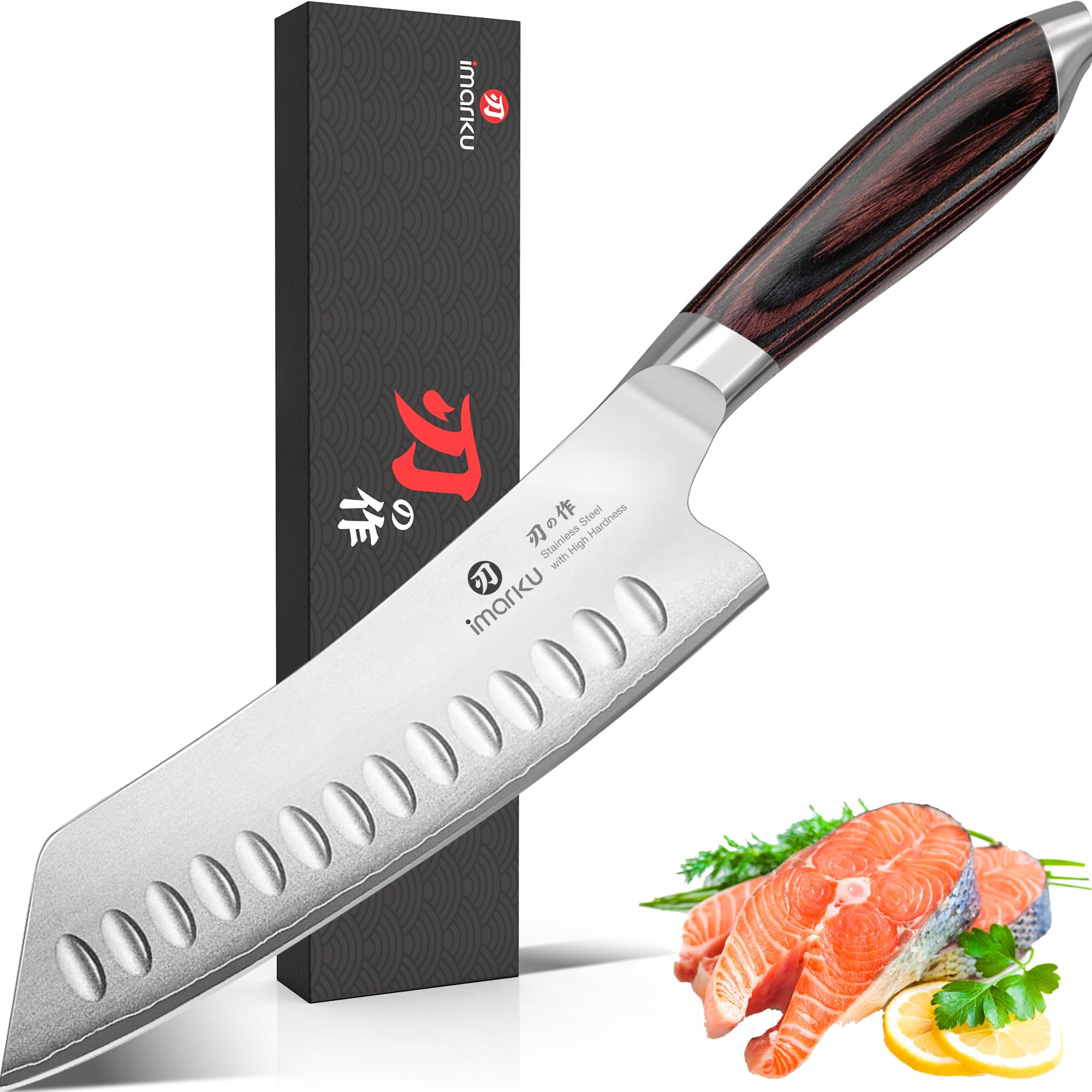
- A 10Cr15CoMoV core sits beneath stainless steel cladding.
- Hollow-edge dimples are intended to help moist food release.
- The raised Pakkawood handle gives extra knuckle clearance.
Best For: Cooks who want a full-size santoku with layered steel and dimples to help release moist ingredients.

imarku 7-Inch Powder Steel Santoku
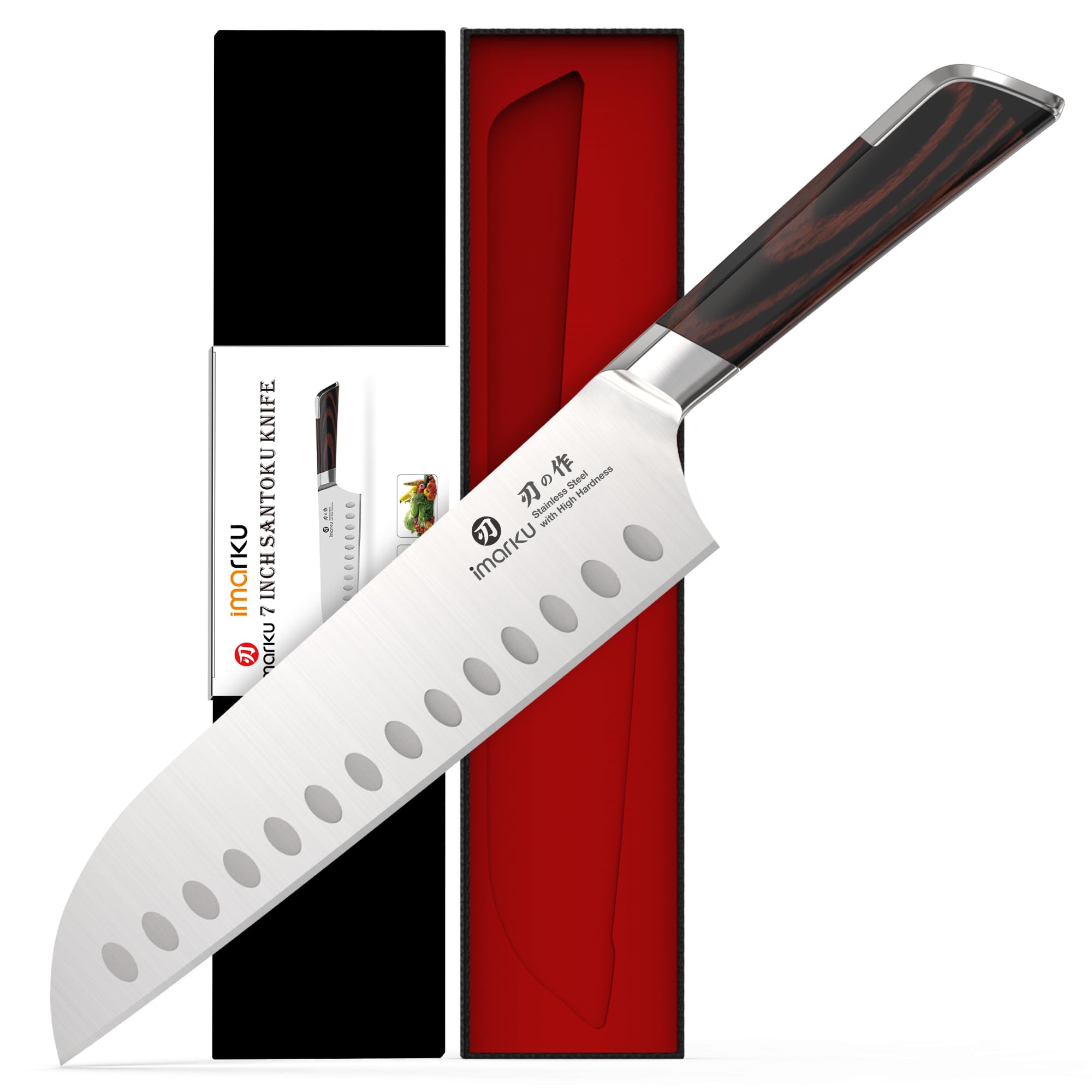
- The forged 7-inch blade uses powder steel.
- The handle has a diamond-profile contour for grip.
- A mirror-finished bolster is designed for balance.
Best For: Cooks seeking a forged 7-inch knife with a powder steel blade and contoured Pakkawood grip.
KEEMAKE 7-Inch Santoku
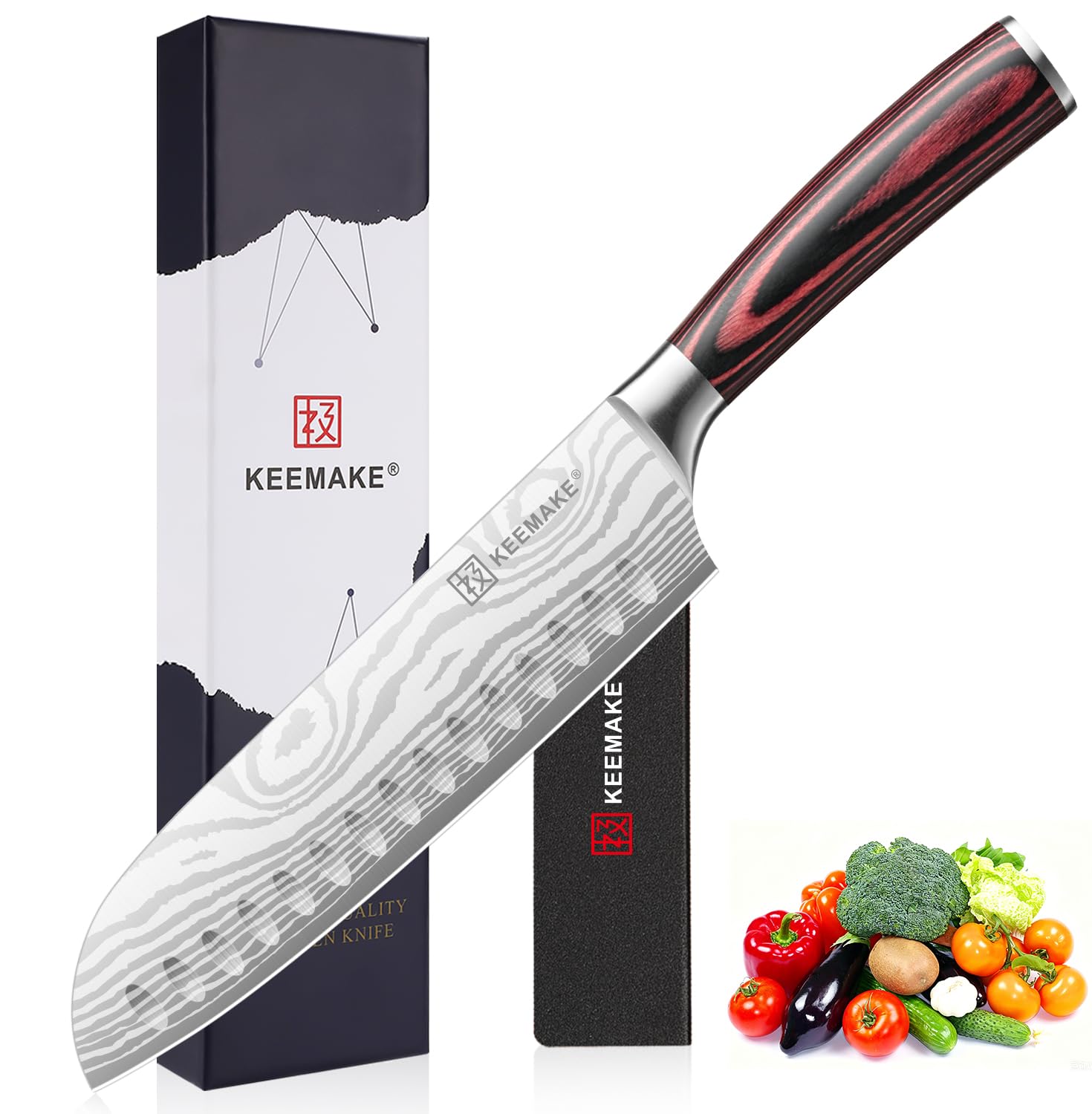
- The forged blade is 7 inches and weighs 8.16 oz.
- The blade uses 1.4116 high-carbon stainless steel.
- A wave-patterned blade is intended to reduce food sticking.
Best For: Cooks who want a lighter full-size santoku for vegetables, fish, and boneless meat.
imarku 7-Inch High-Carbon Santoku
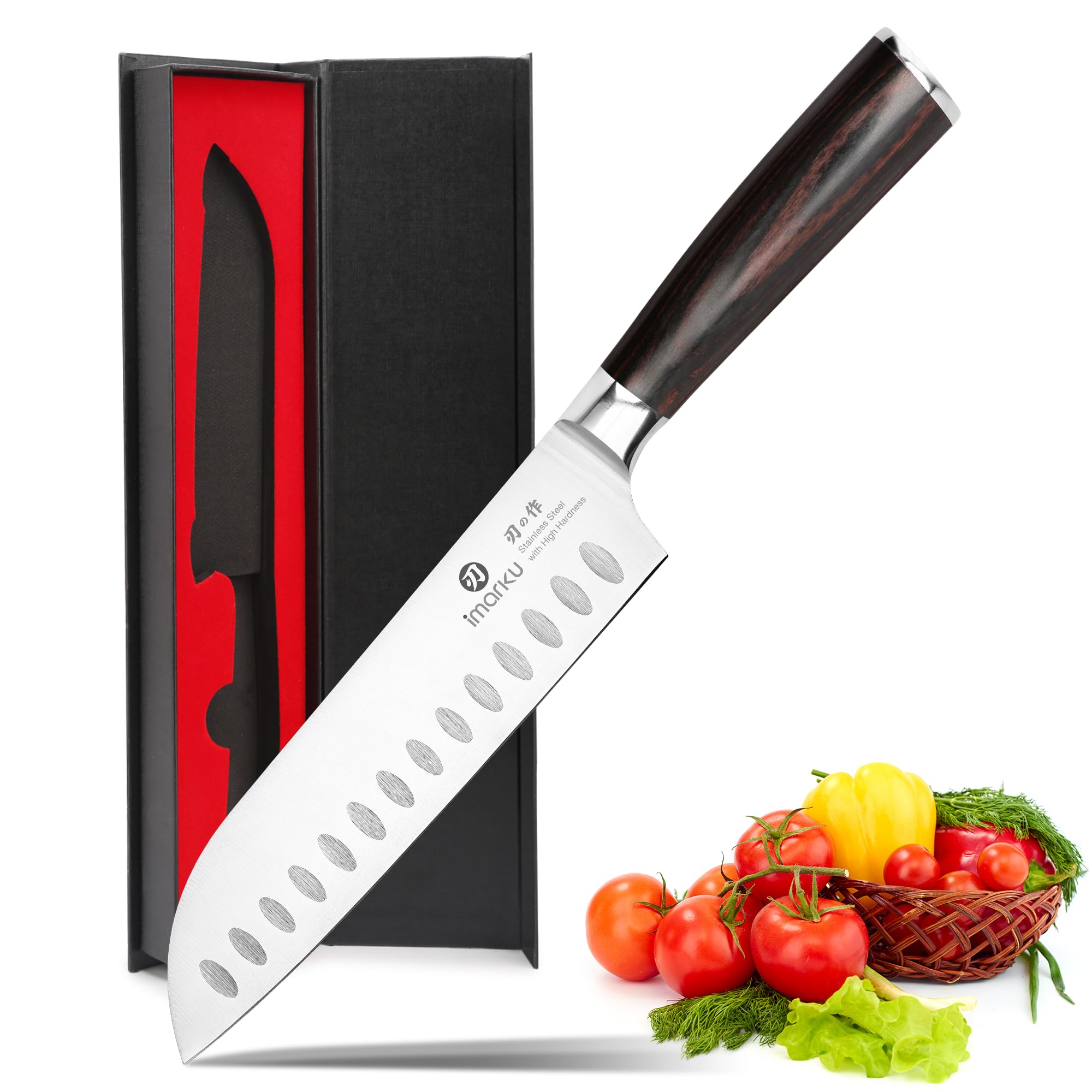
- The knife has a 7-inch hollow-edge blade.
- Its steel is described as high-carbon stainless.
- The edge is hand-polished to 15–18 degrees per side.
Best For: Home cooks who want a hollow-edge santoku for mixed daily prep and a Pakkawood handle.
imarku Orange 7-Inch Santoku
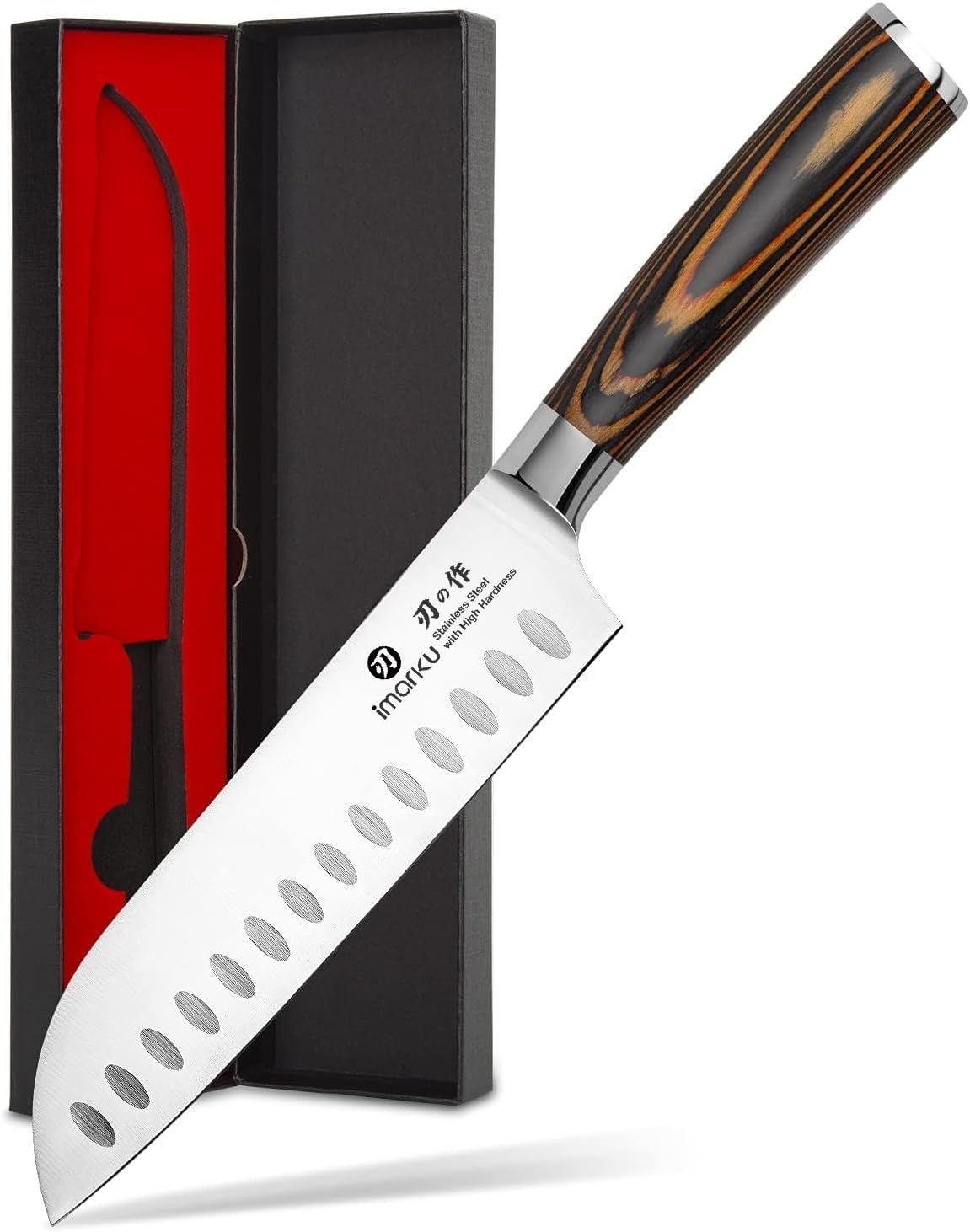
- The blade is 7 inches and has hollow ovals on both sides.
- The blade uses German high-carbon stainless steel.
- Its ergonomic Pakkawood handle is blue in the notes.
Best For: Cooks who want a 7-inch hollow-edge knife with a colored ergonomic handle.
imarku 7-Inch Santoku, Sand-Grinding Finish
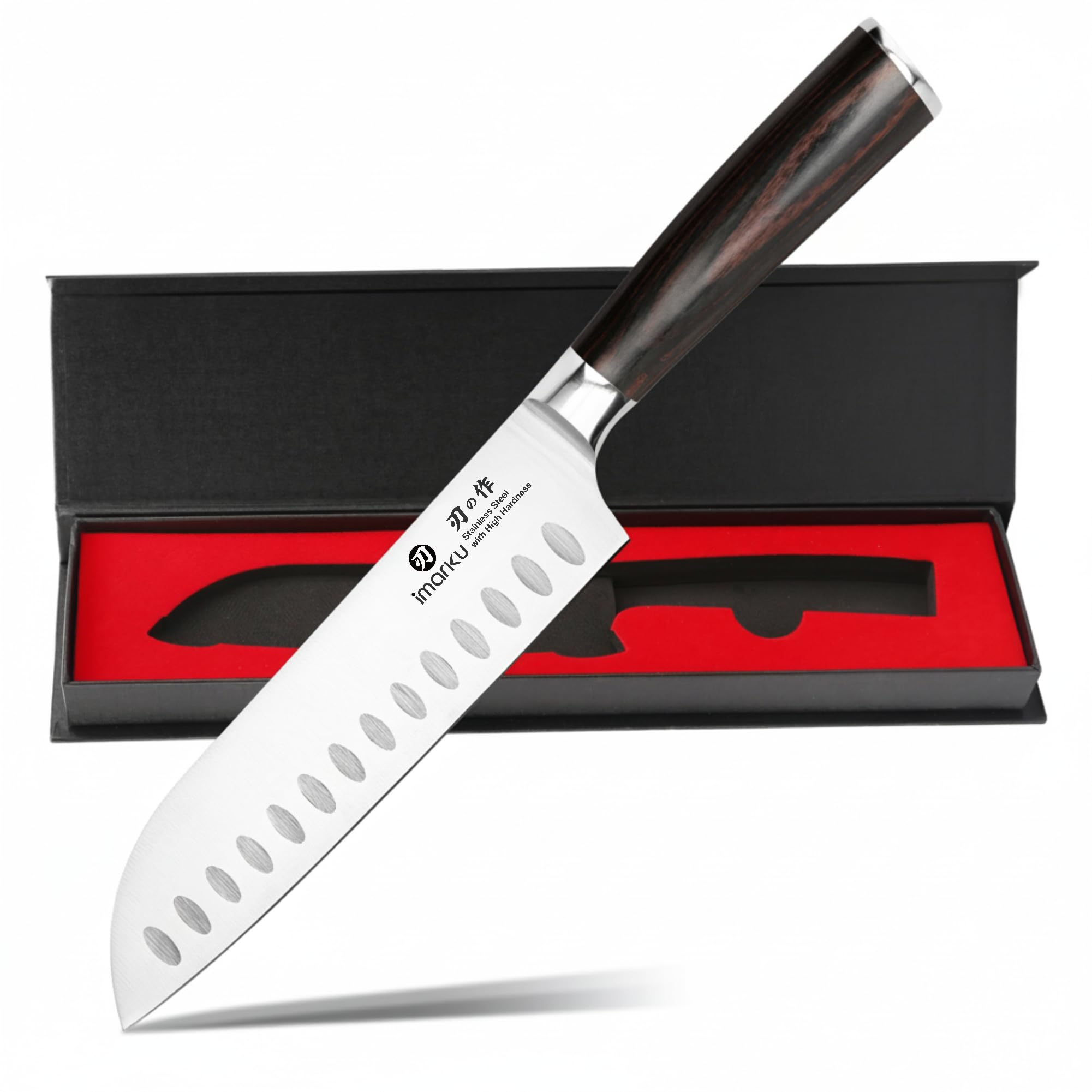
- The knife weighs 190 g.
- The hollow blade is intended to minimize sticking.
- The handle is ergonomic Pakkawood.
Best For: Cooks who want a lightweight santoku for frequent short chopping and slicing tasks.
Zyliss 5.9-Inch Comfort Santoku
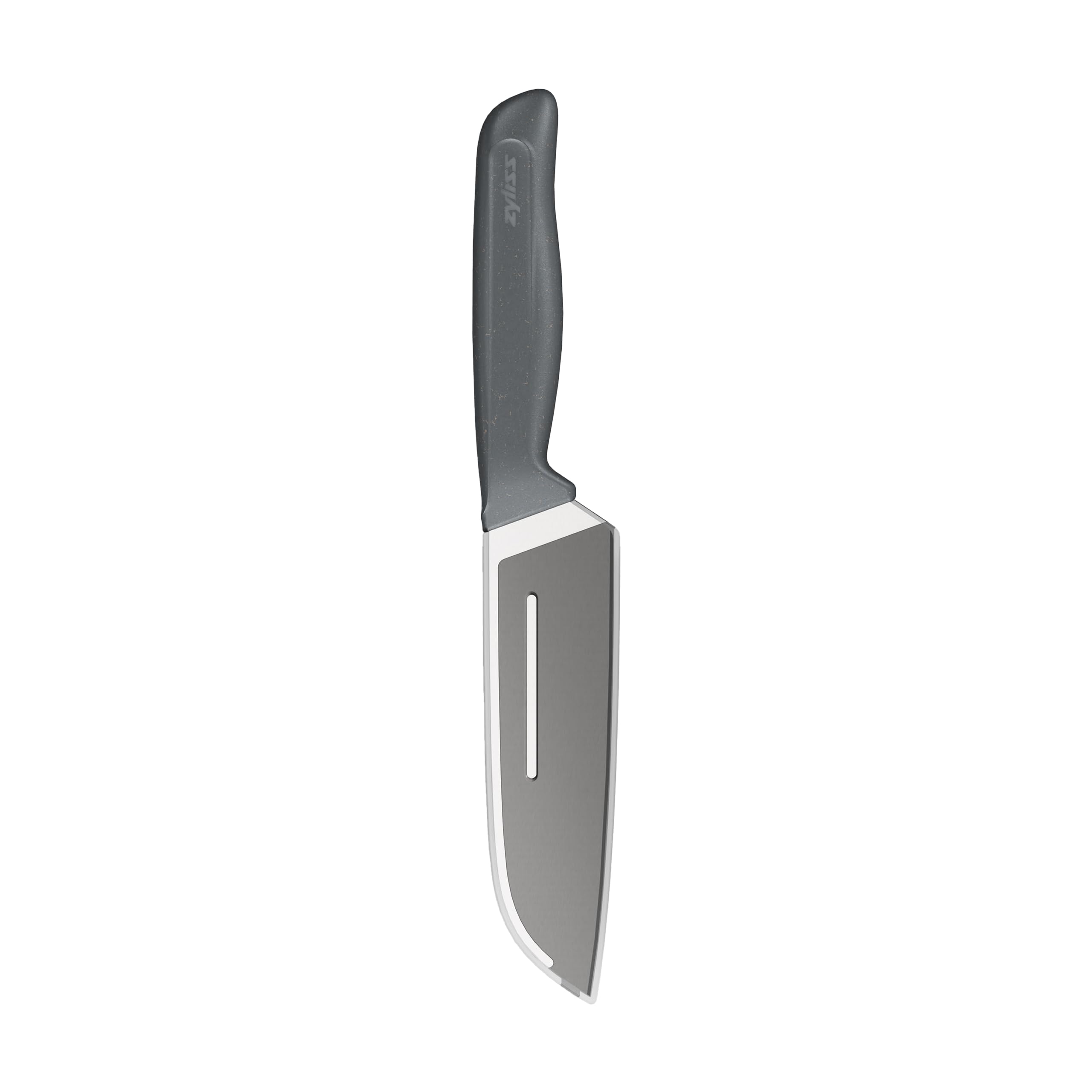
- The santoku blade measures 5.9 inches.
- A protective blade guard is included.
- The contoured non-slip handle is designed for wet hands.
Best For: Cooks seeking a shorter santoku with a contoured non-slip handle and protective sheath.
Layered Steel and Hollow-Edge Design
imarku Japanese Santoku Knife 7 Inch, 10Cr15CoMoV 3-Layer Stainless Steel
This 7-inch imarku combines a 10Cr15CoMoV high-carbon stainless steel core with protective stainless cladding. Its hollow-edge dimples and sandblasted blade face are designed to reduce drag when cutting moist or starchy foods such as potatoes and onions.
The Pakkawood handle has a raised shape for knuckle clearance, and the knife is intended for slicing, dicing, and mincing. The fine edge and listed hardness point to a sharper, more specialized profile than the straightforward everyday options here.
Check whether that edge and the handle shape suit your preferred cutting technique, and confirm care directions before making it a daily-use choice.
Best For: Cooks who want a full-size santoku with layered steel and dimples to help release moist ingredients.
| Pros | Cons |
|---|---|
|
|
Choose this model if you want the combination of a 7-inch blade, layered steel construction, and dimples intended to reduce food sticking. Its raised handle is a practical detail for cooks who want more knuckle clearance during board work.
The sharper edge profile may call for attention to your sharpening preferences, so check how you plan to maintain it and confirm cleaning guidance before buying. Its package includes one knife, which suits shoppers seeking a single santoku rather than a set.
Powder Steel for Edge-Focused Prep
imarku Japanese Santoku Knife 7 Inch, Ultra Sharp Chef Knife, Professional Grade Powder High Carbon Steel Forged Kitchen Knife, PakkaWood Ergonomic Handle, Gifts for Women and Men
This imarku is a forged 7-inch santoku built around powder steel, with an ergonomic Pakkawood handle shaped with a diamond profile. The notes give the blade a hardness of 62±1 HRC and report an initial sharpness figure on the TCC scale; those are specific product figures rather than a promise that every cook will experience the same edge life.
Its mirror-finished bolster is intended to balance the blade and handle, while the blade is described as stain and corrosion resistant. The gift box may suit gifting, but check cleaning and sharpening instructions if you plan to use it for routine meat and vegetable prep.
Best For: Cooks seeking a forged 7-inch knife with a powder steel blade and contoured Pakkawood grip.
| Pros | Cons |
|---|---|
|
|
Consider this option if powder steel and a shaped grip matter more to you than a simpler steel specification. Its hardness figure and reported TCC sharpness number are unusually specific details, so check that you are comfortable with the maker's care and sharpening guidance before purchase.
The forged construction and gift box make it a distinctive single-knife choice. Compare the handle contour with your grip preference, especially if you use a pinch grip or spend long periods chopping.
Lightweight Control for Push Cuts
KEEMAKE 7" Santoku Knife, Razor Sharp Chef Knife with Ergonomic Handle
The KEEMAKE uses a 7-inch forged blade made from 1.4116 high-carbon stainless steel and weighs 8.16 oz. Its notes describe a hand-sharpened edge of 12–15° per side, a shaped Pakkawood handle, and a wave-patterned blade intended to reduce food cling. The profile supports push cutting and board contact, with a gently curved tip for limited rocking.
That mix suits cooks who prefer a nimble santoku for everyday vegetables, fish, and boneless cuts. Check the care guidance and whether you prefer a flatter push-cutting stroke before choosing it over a more rocking-oriented knife.
Best For: Cooks who want a lighter full-size santoku for vegetables, fish, and boneless meat.
| Pros | Cons |
|---|---|
|
|
Pick the KEEMAKE if a lighter feel and push-cutting profile matter in your prep routine. Its curved tip allows some rocking, but the notes emphasize a flatter edge and board contact, so cooks who rely on a pronounced rocking motion should consider that tradeoff.
The wave pattern targets food cling, while the 1.4116 steel and listed edge angle provide concrete details to compare. Check the cleaning instructions and included storage protection before buying.
Hollow Edge for Everyday Chopping
imarku Chef Knife 7 Inch Kitchen Knife Ultra Sharp Santoku Knife - High Carbon Japanese Chefs Knife, Kitchen Gadgets 2025, Apartment Essentials, Birthday Gifts for Him Her, Best Gifts for Women Men
This 7-inch imarku uses high-carbon stainless steel and a hollow-edge blade designed to create gaps between the knife and cut food. Its notes cover chopping, slicing, dicing, and mincing across meat, vegetables, fruit, and bread, making it a broadly useful kitchen option.
The Pakkawood handle is described as ergonomic, and the hand-polished edge is specified at 15–18 degrees per side. It arrives in a gift box.
Check the maker's care and sharpening directions, and decide whether the hollow edge and stated sharpening angle match the cutting feel you prefer for regular meal preparation.
Best For: Home cooks who want a hollow-edge santoku for mixed daily prep and a Pakkawood handle.
| Pros | Cons |
|---|---|
|
|
This is a practical candidate for cooks who want a familiar 7-inch size and a hollow edge for varied meal prep. The notes describe a 15–18 degree edge on each side and a 2.5 mm blade thickness, details worth comparing with your sharpening setup and preferred feel.
Its task range includes bread as well as produce and meat, but it remains a single santoku rather than a dedicated bread knife. Verify care guidance and storage protection before buying.
Blue Pakkawood Handle and Hollow Edge
imarku Santoku Knife, 7 inch Kitchen Knife Ultra Sharp Cooking Knife Japanese Chef Knife -High Carbon Stainless Steel - Ergonomic Pakkawood Handle, Gifts for Women/Men, Orange
This imarku has a 7-inch blade made from German high-carbon stainless steel, with a hollow oval edge on both sides intended to reduce sticking. The notes describe a blue ergonomic Pakkawood handle that reduces pressure on the grip.
The title identifies the color as Orange, so confirm the handle appearance on the offer you select before purchase. Its stated edge angle is 15–18 degrees per side, and the knife is described for chopping, slicing, dicing, and mincing.
Check the actual color, cleaning directions, and storage details if those affect your kitchen setup.
Best For: Cooks who want a 7-inch hollow-edge knife with a colored ergonomic handle.
| Pros | Cons |
|---|---|
|
|
This knife offers the hollow-edge and 7-inch format found in other imarku options, with a colored handle as its most practical distinguishing detail. The title and notes disagree about color, so verify the exact variant before purchase if appearance matters.
Its stated edge angle and German high-carbon stainless steel give useful comparison points, but the notes do not describe blade thickness or a sheath. Check care and storage instructions for a daily-use knife.
Lightweight Steel for Quick Prep
imarku Santoku Knife 7 Inch Japanese High Carbon Stainless Steel Chef Knife | Japanese Style Sharp Kitchen Knife Sand Grinding Finish Effortless Prep Meats And Vegetables Best Gifts For Women And Men
This imarku is a 7-inch santoku with a high-carbon stainless steel blade and sand-grinding finish. Its notes give a weight of 190 g and describe a hollow blade intended to reduce sticking, along with an ergonomic Pakkawood handle.
The product is presented for slicing vegetables, fruit, and meat, while the lower listed edge angle of 28+ degrees on each side is a useful detail to review against your sharpening preferences. It comes in a gift box.
Check the exact care instructions and how the stated edge suits your intended prep before choosing it for daily work.
Best For: Cooks who want a lightweight santoku for frequent short chopping and slicing tasks.
| Pros | Cons |
|---|---|
|
|
Choose this model if you prioritize a stated weight of 190 g and want a hollow blade for routine slicing and chopping. The notes give an edge angle of 28+ degrees per side, which makes sharpening preference a useful buying check alongside its steel and handle.
The sand-grinding finish distinguishes its surface treatment from the other options. Confirm care guidance and storage details before purchase, since the supplied facts do not identify a sheath or cleaning method.
Compact Santoku with Blade Guard
Zyliss Comfort Knife - Japanese Stainless Steel Blade - Non-Slip Contoured Handle for All Hand Sizes - Kitchen Tools with Safety Kitchen Blade Guards - Dishwasher Safe - 5.9" Santoku Knife
The Zyliss Comfort Santoku has a 5.9-inch Japanese stainless steel blade and a non-slip, contoured handle with finger indents. The knife is supplied with a blade guard, making it a useful choice for drawer storage or taking along for camping.
Its shorter blade may suit cooks who prefer a compact knife for smaller boards or routine prep. The product title also calls it dishwasher safe, while the notes describe a taper-ground blade and edge retention.
Check whether the compact length provides enough reach for your typical venison cuts and larger vegetables before choosing it as your main kitchen santoku.
Best For: Cooks seeking a shorter santoku with a contoured non-slip handle and protective sheath.
| Pros | Cons |
|---|---|
|
|
Consider the Zyliss if compact size, a non-slip handle, and included protection matter more than having a longer blade. The finger indents and contoured grip are distinctive, and the title calls it dishwasher safe.
Its shorter blade may be less convenient for large cuts or broad produce, so think about the size of your usual wild game portions and cutting board. It is the only option here whose notes explicitly mention a protective sheath.
How to Choose Santoku Knives
How We Picked Santoku Knives
This selection focuses on actual santoku knives with identifiable blade sizes and practical features for cutting meat, fish, and vegetables. It includes full-size 7-inch models for broader prep and a 5.9-inch option for cooks who prefer a more compact blade.
We also considered edge and steel details, handle shapes, food-release features, and storage protection where those facts were available. Similar-looking imarku models remain distinct only where their steel, edge, handle, or finish details meaningfully differ; the orange-title offer is included with its color uncertainty disclosed.
For wild game cooking, a knife can be asked to handle trimmed boneless cuts, onions, herbs, and other meal-prep ingredients. These santokus are not described as boning knives, so choose based on kitchen slicing and chopping rather than expecting a narrow blade for working around joints or bones.
Consider the size of your cutting board and the typical portions you prepare, then compare the documented blade length and grip design.
Comparing Santoku Knives
Blade construction and edge details are the clearest distinctions. The powder steel imarku gives a hardness figure, while its 10Cr15CoMoV counterpart specifies a layered core and stainless cladding.
KEEMAKE uses 1.4116 steel and notes a 12–15° edge per side. Other imarku models specify 15–18° or 28+° per side.
These figures describe different models, so consider how they align with your sharpening habits instead of assuming the smallest angle alone determines which knife suits you.
Several models add blade features intended to help food release. The layered imarku has hollow-edge dimples, the KEEMAKE uses a wave pattern, and the remaining imarku hollow-edge models have scallops or hollows.
Such designs may suit cooks who often slice moist or starchy vegetables. They do not replace good cutting technique or establish that a blade will never collect food.
The Zyliss has a shorter blade and included guard, which make it a distinct compact-storage option.
| Product | Standout features | Best for |
|---|---|---|
| imarku 7-Inch 10Cr15CoMoV SantokuCheck Price |
| Cooks who want a full-size santoku with layered steel and dimples to help release moist ingredients. |
| imarku 7-Inch Powder Steel SantokuCheck Price |
| Cooks seeking a forged 7-inch knife with a powder steel blade and contoured Pakkawood grip. |
| KEEMAKE 7-Inch SantokuCheck Price |
| Cooks who want a lighter full-size santoku for vegetables, fish, and boneless meat. |
| imarku 7-Inch High-Carbon SantokuCheck Price |
| Home cooks who want a hollow-edge santoku for mixed daily prep and a Pakkawood handle. |
| imarku Orange 7-Inch SantokuCheck Price |
| Cooks who want a 7-inch hollow-edge knife with a colored ergonomic handle. |
| imarku 7-Inch Santoku, Sand-Grinding FinishCheck Price |
| Cooks who want a lightweight santoku for frequent short chopping and slicing tasks. |
| Zyliss 5.9-Inch Comfort SantokuCheck Price |
| Cooks seeking a shorter santoku with a contoured non-slip handle and protective sheath. |
Choosing a Santoku for Venison and Produce
For boneless venison steaks or trimmed portions, a 7-inch blade offers the reach found across most of this group. The lighter KEEMAKE may appeal if you value an agile feel, while the powder steel imarku has the most detailed edge and hardness specifications.
For vegetable-heavy prep, consider the hollow or dimpled blades, then weigh those details against the grip shape and sharpening information. A santoku's broad blade can also help move chopped ingredients from board to pan.
Match the handle to your grip and cutting rhythm. The layered imarku calls out raised knuckle clearance, KEEMAKE describes a shaped Pakkawood grip, and Zyliss uses finger indents with a non-slip contour.
These features suit different preferences, so choose from details that matter at your board. Confirm care guidance before buying: only the Zyliss title explicitly identifies dishwasher safety, while several other models leave cleaning method unspecified.
Storage, Care, and Edge Maintenance
Storage protection varies. Zyliss specifically includes a blade guard and describes drawer or camping storage as a use case.
The other selected products do not specify a sheath in the available details, so plan for safe storage and check exactly what is included. The Zyliss title also says dishwasher safe; for the other knives, verify cleaning directions rather than assuming dishwasher compatibility.
Edge care deserves attention when the product gives a specific angle or steel construction. Compare the listed angle with your sharpening tools or the service you use, and check whether the maker recommends honing or hand washing.
Steel names and hardness numbers help distinguish the choices, but they do not provide a complete maintenance routine. Keep those unknowns in mind if the knife will see frequent use during game processing and meal preparation.
Who Should Buy Which Santoku Knife?
Choose the KEEMAKE for a documented lightweight feel and a blade profile built around push cuts. Pick the 10Cr15CoMoV imarku if layered construction, hollow dimples, and raised handle clearance fit your priorities.
The powder steel imarku is a candidate for cooks interested in its specific hardness and sharpness figures. For a shorter, sheath-ready knife, the Zyliss stands apart with a 5.9-inch blade and contoured grip.
The remaining imarku models offer familiar 7-inch formats with hollow-edge designs, distinct handle or finish details, and stated edge angles or weight where available. Verify the color on the orange-title model, since its notes call the handle blue.
For any model, check cleaning directions, included storage, and sharpening guidance against your routine before purchasing. Choose by blade reach, grip, edge maintenance, and how you prepare the meat and produce you cook most often.